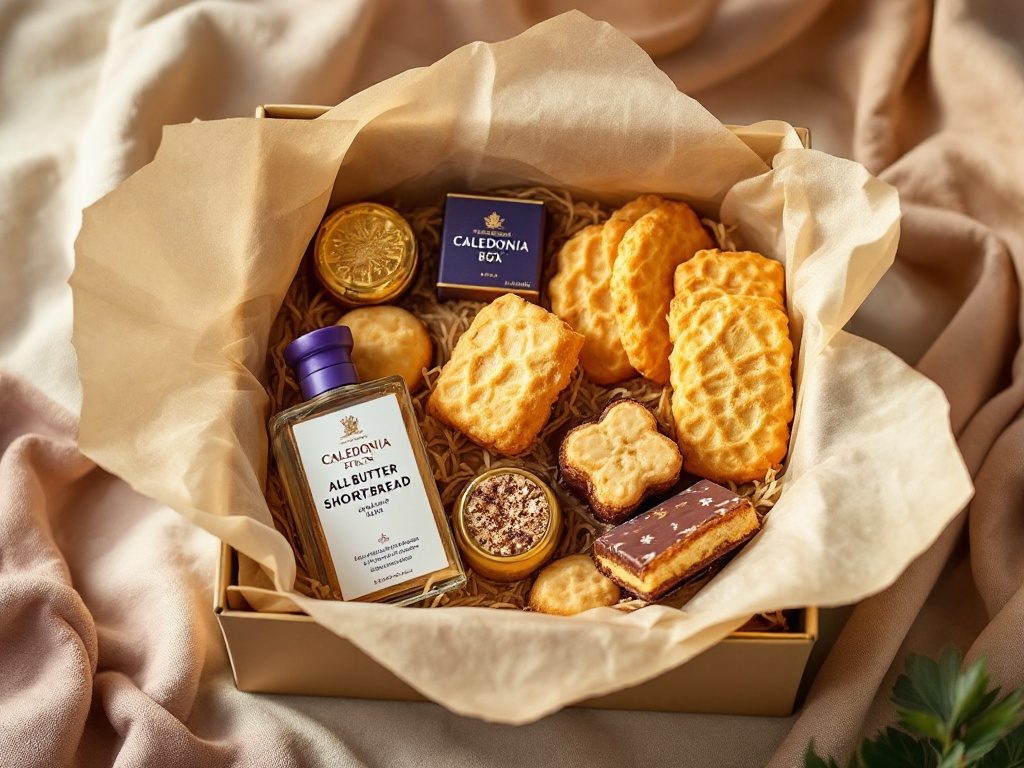
The tastes that bring Scotland home
A square of tablet on the tongue and, all at once, you're eight years old in your gran's kitchen with the radio on. These are the flavours the diaspora aches for — and the wee stories folded inside each one.
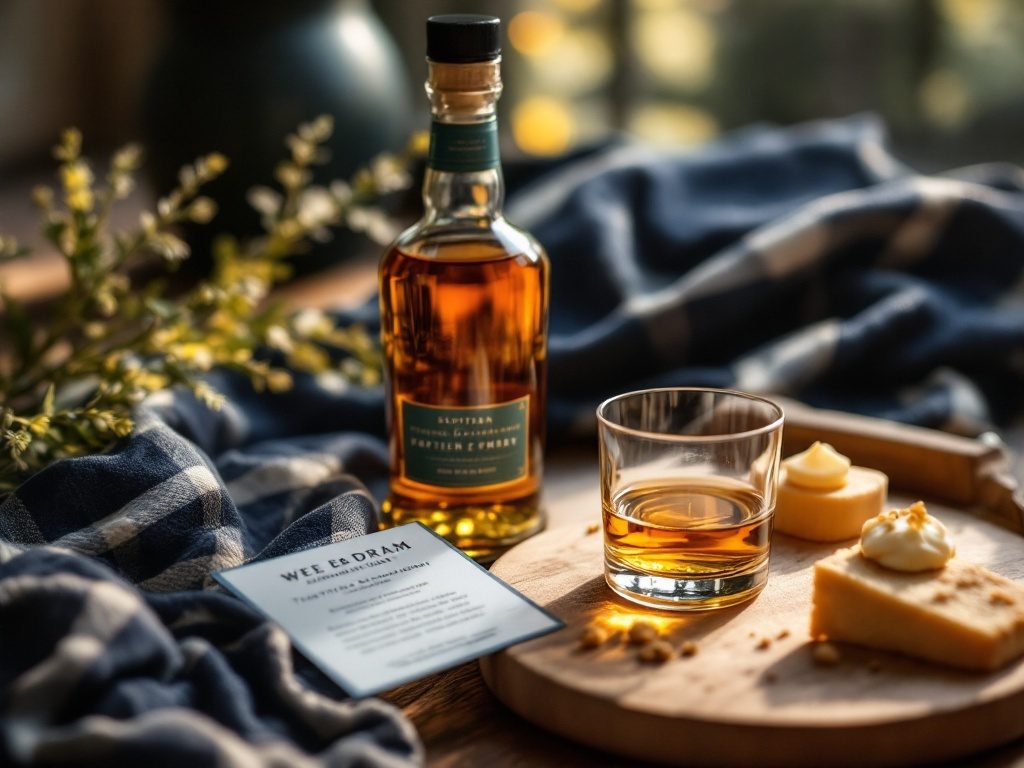
Ask a Scot who's lived abroad long enough what they miss, and they'll rarely start with the mountains. They'll start with a taste. The particular sweetness of proper tablet. The buttery snap of shortbread that shatters just so. The orange bite of a whisky marmalade on cold toast. Food is the fastest road home there is — quicker than a photograph, quicker than a phone call. One bite and the whole feeling arrives at once.
That's the quiet idea at the heart of every Caledonia Box. We can't post the light over the Cairngorms or the smell of rain on heather. But we can send the shortbread, the dram, the wool that smells faintly of a Hebridean croft — and let the memory do the rest. Here are the tastes our community reaches for hardest, and why a wee box of them can undo a grown adult entirely.
Shortbread: the taste of being welcomed in
There's a reason shortbread turns up at every Scottish threshold — Hogmanay, christenings, a neighbour's kitchen when someone's had bad news. It's the biscuit of hospitality. Three ingredients, roughly equal parts butter, sugar and flour, and yet no two makers get the same result. Our boxes carry it from small bakers who still press the dough by hand and prick it with a fork, the way it's always been done.
For the folk who write to us from Toronto or Auckland, shortbread is almost never about the biscuit itself. It's about the tin it came in — usually a battered tartan one that had long since stopped holding shortbread and started holding buttons, spare keys and old photographs. A wee taste of a whole household.
Tablet: sweeter than fudge, and worth the argument
Let's settle this gently: tablet is not fudge. Fudge is soft and yielding. Tablet is firmer, grainier, and somehow more intense — a wee square that dissolves into pure, buttery sweetness on the tongue. Made properly, it takes patience, a sugar thermometer and a strong arm for the beating. Made improperly, it's either a brick or a puddle, and every Scottish family has strong opinions about whose auntie makes it best.
It's the sweet that appears at weddings and funerals alike, wrapped in wee twists of paper. For the diaspora, tablet is the flavour that's almost impossible to buy abroad — the imported versions never quite land — which is exactly why it's a fixture in the box. A homesick pinch, solved.
Tunnock's: the wrapper you'd know in the dark
Few things are as instantly, gloriously Scottish as a Tunnock's Tea Cake or Caramel Wafer in its red-and-gold foil. Made in Uddingston since 1890, they're the lunchbox legend that every Scottish child grew up with — and the one souvenir expats will beg visiting relatives to smuggle over in a suitcase. There's real chemistry to the joy: the crack of chocolate, the give of the mallow, the paper wrapper you can smooth flat and fold into a wee triangle out of pure habit.
When a Tunnock's turns up in a box halfway around the world, grown adults have been known to gasp. It's not fancy. That's the whole point. It tastes of the ordinary, everyday Scotland — the corner shop, the school bag, the tea break — and the ordinary is what you miss most.
Irn-Bru: the lore in a bottle
We can't always post it — the fizz and the weight make Scotland's other national drink a tricky traveller — but no honest account of Scottish tastes could leave out Irn-Bru. Brightly orange, cheerfully mysterious, and "made in Scotland from girders" (it isn't, but the legend's better), it's the taste of a chip-shop Friday and, whisper it, the morning after Hogmanay. When we can slip a wee can or a nod to it into a box, the reaction is always the same: pure, uncomplicated glee.
Some flavours you love because they're sophisticated. Irn-Bru you love because it tastes exactly like home did when you were nine.
Whisky marmalade: breakfast with a wee dram in it
Marmalade is a Scottish institution — some say it was born in Dundee — and when you fold a measure of Scotch whisky through the Seville oranges, you get something quietly grown-up and unmistakably ours. Bitter, bright, warming, with that faint smoky note underneath. Spread thick on hot toast, it's the taste of a slow Saturday when there's nowhere to be.
It's a favourite with our gift-givers, too — a jar of small-batch whisky marmalade from a Scottish maker feels like a real thing from a real place, not a fridge-magnet souvenir. A wee luxury that says: I was thinking of home, and I was thinking of you.
The dram: a thimble of the hills
And then, of course, the whisky itself. Not a full bottle — a curated wee sample from a Scottish distillery, enough for one honest, unhurried dram by the fire. Whisky is the most storied taste of all: peat and sea for an Islay, honey and heather for a Speyside, the whole geography of the country poured into a glass. For the diaspora, a dram isn't just a drink. It's a toast — to the folk far away, and the ones you'd give anything to sit beside again. Slàinte.
Shortbread
Hand-pressed by small bakers. The taste of a Scottish welcome — and the tartan tin it always outlived.
Tablet
Firmer and grainier than fudge, sweeter than sense. Nearly impossible to buy right abroad.
Whisky marmalade
Seville oranges with a measure of Scotch folded through. Slow Saturdays in a jar.
A wee dram
A curated distillery sample — the whole geography of Scotland poured into a single glass.
Why a box, and not just a parcel
You could, in theory, order all of this yourself, from a dozen different corners of the internet, and pay a small fortune in shipping for the privilege. What a Caledonia Box does is gather it — every month, a curated mystery of the finest goods from 100% Scottish makers, wrapped the way you'd wrap a gift, and sent anywhere in the world. Boxes start from £34 a month, with better value the longer you stay (a 12-month prepay saves around 15%). Shipping is paid at cost — roughly £9.95 within the UK, £16.95 to Europe and £24.95 to the US and rest of world — because we'd rather be honest about it than bury it in the price.
But the real reason is simpler than logistics. Opening a box is the closest thing to being handed something across a Scottish kitchen table. It's the anticipation, the unwrapping, the wee card, the first bite that stops you in your tracks. It's coorie — that snug, hunkered-down, wrapped-up feeling — arriving by post. And for a heart that misses hame, that's worth more than any single biscuit.